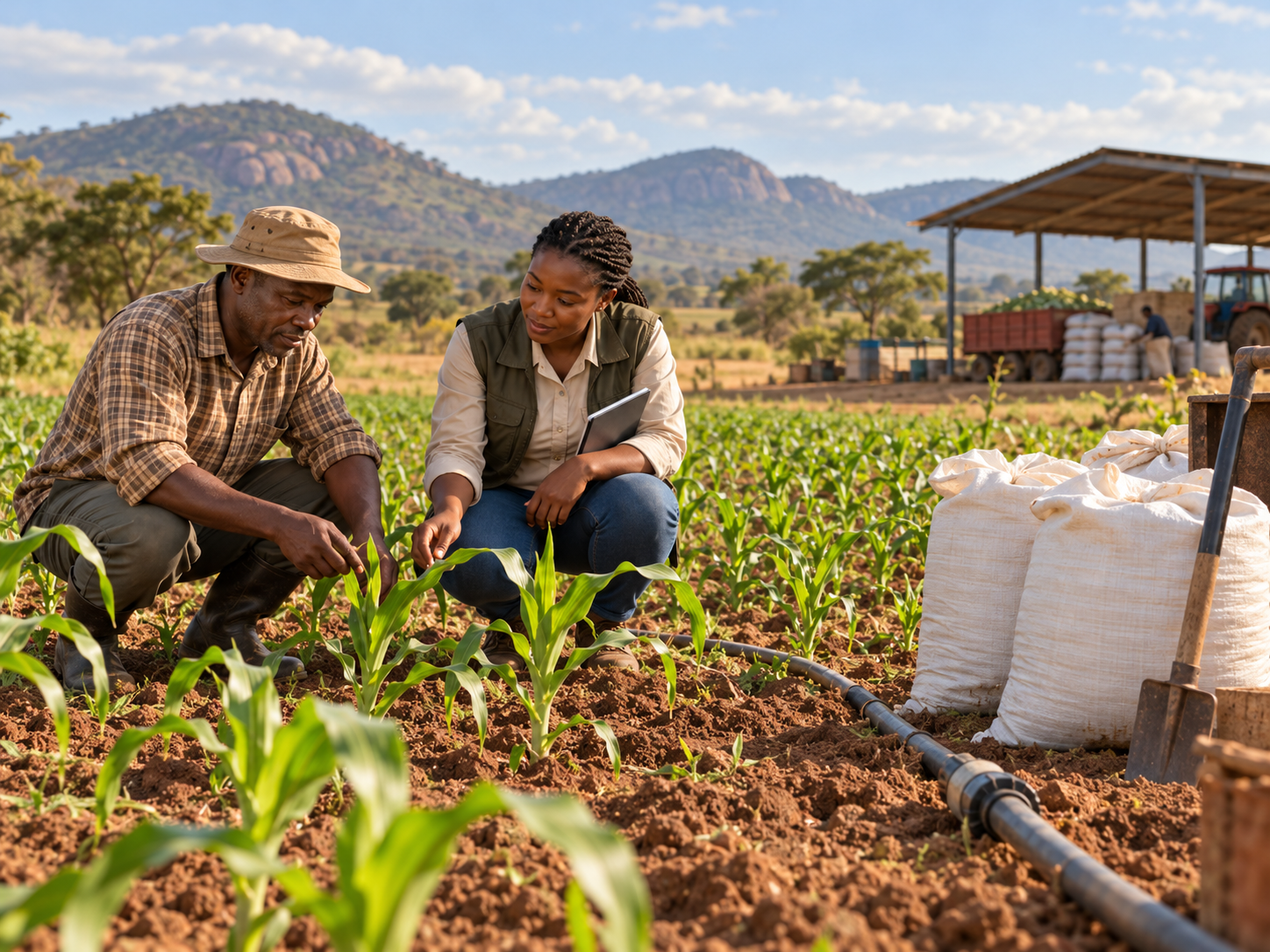
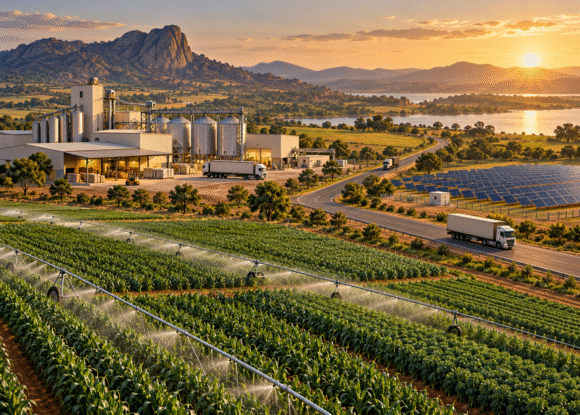
A loan for seed and fertiliser does not necessarily fund a farming season. Labour, pumping, repairs, transport and the wait for a buyer to pay can leave a producer short of cash even when the input package is complete. Zimbabwe agricultural season financing therefore needs to cover the journey from planting to collected sales, not stop at the farm gate.
For 2026/27, that distinction is especially important. The financing opportunity lies in keeping viable production moving while deciding, before money is committed, who carries delayed rainfall, lower output and unpaid invoices. More capital can help, but its timing and terms will determine how useful it is.
The rainfall outlook changes the lending case
The Meteorological Services Department presented its national seasonal outlook on 11 September 2026. It indicates increased chances of below-normal rainfall for October to December, with regional differences in the following quarter. This is a forecast, not certainty about rainfall, yield or losses on an individual farm. [S01]
A quarterly rainfall total cannot tell a lender whether rain will arrive when planting requires it. A farm may receive useful rain and still face a damaging dry spell at a critical growth stage. Conversely, a cautious national outlook does not make every crop or district unfinanceable.
That calls for farm-specific budgets and staged decisions. Funding can be released against verified input delivery, field preparation and appropriate planting conditions, rather than assuming the whole plan must proceed unchanged. The Ministry’s July preparedness guidance also stresses crop varieties suited to local conditions and early livestock-feed planning. [S02]
On 6 October, FAO reported the operational launch of the Drought Action Committee and work towards a costed investment plan. Coordination may help resources reach priority needs, but planning and mobilisation should not be confused with financed delivery. [S03]
New facilities are not the same as accessible farm credit
CABS’s 24 September announcement illustrates the distinction. Its US$30 million partnership with British International Investment comprises a signed US$20 million term facility and a planned US$10 million trade facility for eligible agriculture and food-manufacturing exporters. It does not establish that the full headline amount has been disbursed to farmers. [S04]
This is a potentially useful channel for productive investment and trade. It is not evidence that a rain-fed grain farmer, an input dealer and an established exporter can all obtain the same facility. Each still needs a lender decision, suitable repayment arrangements and confirmed access to funds.
Local-currency policy also changed before this season. On 28 September, the RBZ reduced the Targeted Finance Facility funding rate to 12.5% and capped banks’ all-inclusive on-lending to productive sectors at 22.5%. These are facility-specific terms, not a universal agricultural borrowing rate or a guarantee of approval. [S05]
Comparisons between USD and ZiG loans require more than the quoted interest rate. Fees, the currency of input purchases, the currency actually received from the buyer and any conversion exposure all affect repayment. A lower nominal rate can still leave a borrower with a larger currency mismatch.
What Zimbabwe agricultural season financing must cover
The most useful financing plan separates immediate operating needs from assets that earn over several seasons. The following framework shows where cash can become trapped and what the funding structure needs to address.
Seasonal need
Cash requirement
Financing implication
Inputs and field preparation
Seed, fertiliser, labour and delivery
Staged working capital linked to the crop calendar
Irrigation operations
Water, pumping, repairs and maintenance
Operating finance separate from longer-life asset funding
Harvest and marketing
Harvesting, transport, storage and grading
Funding through delivery rather than planting alone
Buyer settlement
Delay between accepted delivery and payment
Repayment aligned to collection, with buyer risk tested
Climate protection
Premiums, uninsured loss and claims delay
Defined insurance cover plus a funded contingency
Source: SwitzView commercial analysis based on the official evidence listed below. Structures are transaction-specific; this is not a product availability table.
The table is a commercial framework, not a list of products currently available from every lender. Its main point is that financing the crop does not automatically finance harvest, delivery or the buyer’s payment cycle.
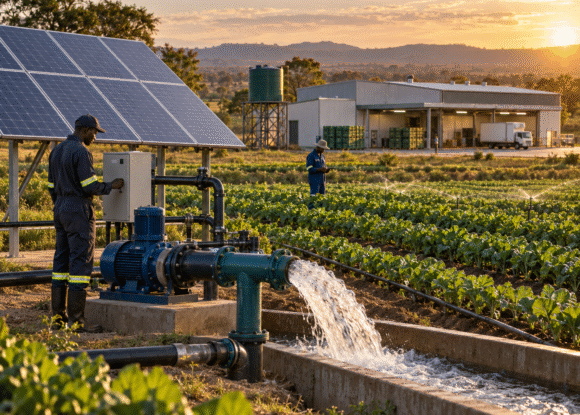
For an existing irrigation scheme, repairing a pump or clearing a distribution fault before planting may protect more production than funding additional hectares without reliable water. Any facility still needs to cover pumping, maintenance and the supply conditions on which irrigation depends.
A new irrigation asset requires a different horizon. Repaying its full cost from one uncertain harvest can place excessive pressure on the seasonal operating budget. Asset finance should be tested over realistic use across seasons, alongside the borrower’s ability to meet ongoing costs. This is an operating and repayment question, distinct from the renewable-energy investment cases examined in our September article.
Offtake and insurance need to work at repayment time
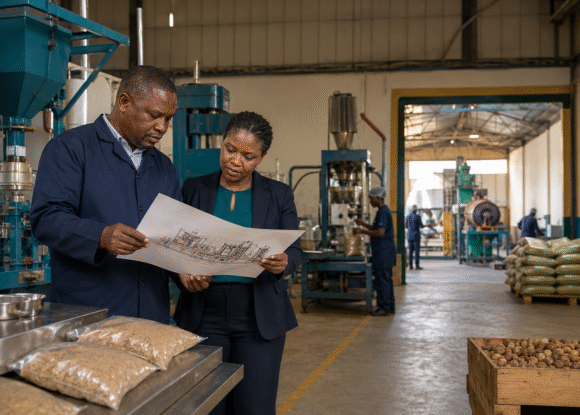
An offtake agreement is an arrangement for a buyer to purchase output. It can strengthen the financing case, but the lender needs to understand the price formula, quality requirements, deductions, delivery obligations and payment date. A buyer’s promise is less useful if rejection rights or slow settlement leave the farmer unable to repay.
Funding should therefore extend to the period when sale proceeds are actually collected. A documented payment mechanism can help direct proceeds towards debt service, but cannot create cash if the crop fails or the buyer cannot pay. Supplier finance and buyer-linked structures also need clear limits on which losses the farmer retains.
Insurance requires similar precision. IPEC’s agricultural-insurance work provides evidence of efforts to expand climate-related protection, while POSB announced a crop, livestock and agricultural loan-protection distribution partnership with AFC Insurance in June 2026. Neither institutional announcement proves that a particular farm has drought cover. [S06, S07]
Before treating insurance as a repayment safeguard, check the insured peril, exclusions, cover limits, premium funding and likely payment timing. With index insurance, payment depends on a specified measure, such as rainfall or area yield, rather than necessarily matching the farmer’s actual loss. That difference is called basis risk.
An insurance payment that arrives after the loan falls due can still leave a cash gap. Lenders, insurers and producers should agree how that gap is funded, rather than assuming a policy removes the need for contingency cash. Uninsured losses and amounts above the cover limit remain with someone in the financing chain.
The structure must fit the producer
A commercial irrigated farm with established buyers faces different constraints from a smallholder growing rain-fed grain. An exporter may have foreign-currency receipts but demanding quality standards; a domestic producer may have a less predictable currency mix. One national lending template is unlikely to fit all of them.
Aggregation can make smaller transactions workable when an operator provides genuine agronomy, input distribution, logistics and payment collection. It becomes less convincing when it simply groups applications while leaving every delivery and repayment problem with the farmer. Many loans in one rainfall zone can also remain exposed to the same shock.
For lenders and investors, the test is whether credible collected cash can service the proposed debt under a weaker season. That requires separate checks for lower yields, weaker prices, late planting and delayed buyer payment, including combinations of those conditions. Rolling debt forward without a stronger repayment source may only postpone a loss.
What will show that financing is working
The next evidence to watch is practical: confirmed borrower approvals, inputs delivered in time, functioning irrigation, insured risks documented and buyers paying as agreed. Announced funding is an opening opportunity. Those operating outcomes will show whether it becomes useful capital.
Zimbabwe agricultural season financing will be strongest where the funding calendar follows production and collection, the debt currency fits revenue and climate losses are allocated explicitly. The season remains uncertain, and no structure removes all risk. The preferred approach is selective financing of viable production with realistic buffers, rather than treating either a positive funding headline or a negative weather outlook as the final answer.
Disclaimer
This article is for general information only and does not constitute personal investment, legal, tax, credit or other professional advice. It reflects information publicly available by 13 October 2026 at 23:59:59 CAT. Forecasts are uncertain; market conditions, regulations, finance terms and insurance coverage may change. Past performance does not guarantee future results. Readers should obtain advice appropriate to their circumstances.
Zimbabwe’s 2027 budget could attract private investment by improving power, irrigation, logistics, tax predictability and financing conditions. Treasury’s strategy provides a useful direction, but proposed allocations are not completed projects or enacted incentives. This article examines where public resources could support viable private activity and what businesses should verify before relying on promised reforms or funding.
Zimbabwe’s capital markets now extend beyond listed shares into REITs, debt structures, commodity-oriented funds and private vehicles. Yet registration and product availability do not guarantee access or liquidity. The real opportunity lies in instruments with transparent cash flows, credible valuation, currency alignment and practical exits that can meet the needs of institutions and private investors.
Zimbabwe’s mineral export receipts are rising sharply, but the increase is not a simple production or beneficiation story. Official data show a concentrated uplift led by gold, commodity prices and selected product-form changes, alongside mixed physical output. For investors, the durable opportunity lies in separating price exposure, verified volume growth, formalisation and commercially proven domestic processing.
Zimbabwe’s renewable-energy opportunity in agriculture is commercially credible, but technology alone will not secure funding. This article examines where solar irrigation, cold storage, processing and biogas can generate bankable cash flows, which financing structures fit each use case, and why currency matching, utilisation, offtake and project preparation will determine whether projects move from potential to investment.
Zimbabwe’s first-quarter tourism indicators improved, but the headline 438% investment surge needs careful reading. ZTA says registration of previously informal facilities drove much of the increase. Arrivals and receipts rose, yet national occupancy stayed at 38%. The commercial opportunity is therefore selective: upgrade proven assets, build resilient regional demand and verify that every reported investment is deployable capital.
Zimbabwe’s latest inflation data shows a more stable price environment, while bank lending has also expanded. Yet high nominal and real borrowing costs, the dominance of US dollar credit, cautious bank pricing and limited local-currency transmission still constrain productive finance. This article assesses what must change before stability becomes accessible business credit at scale for Zimbabwean companies.