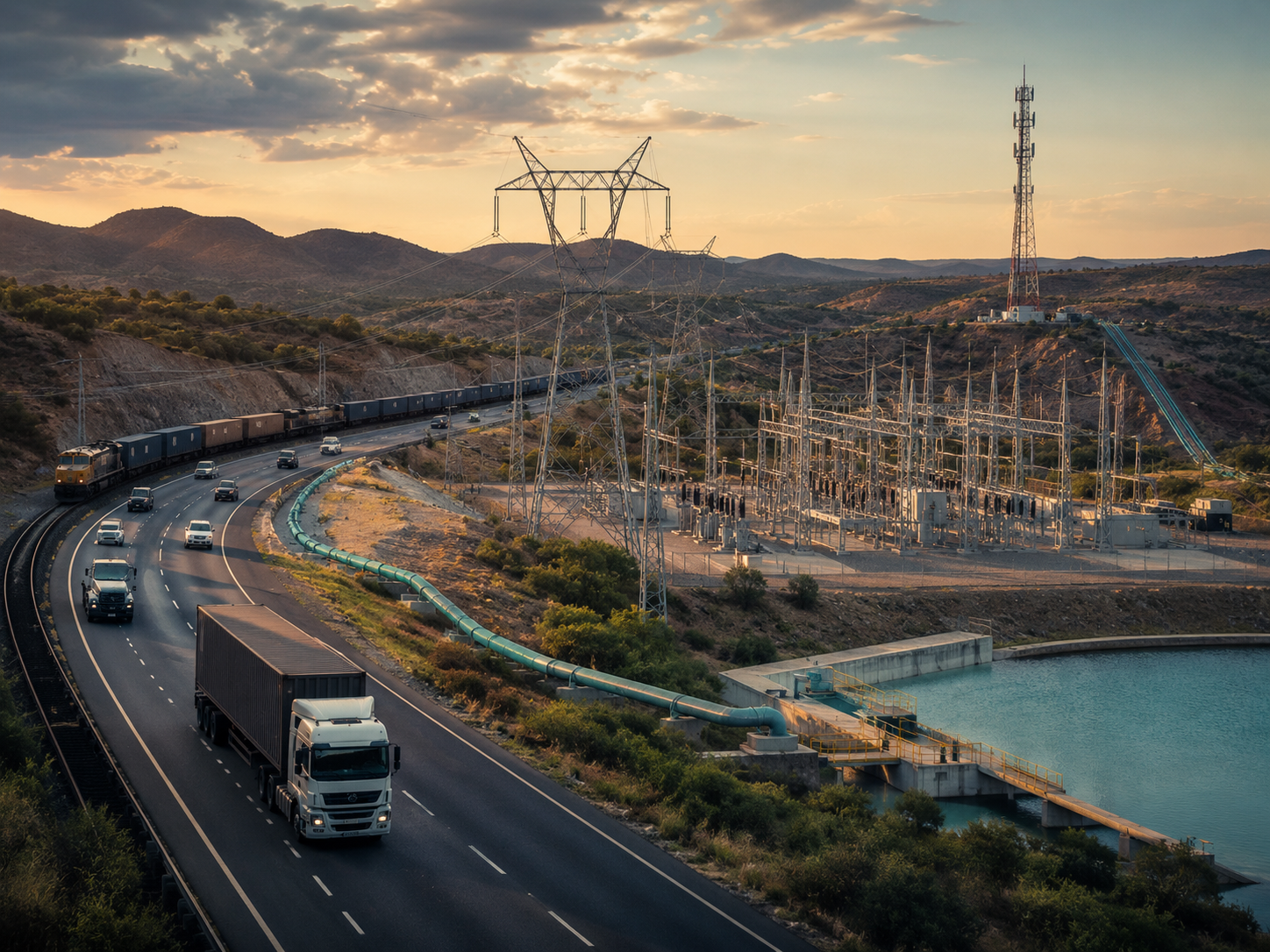
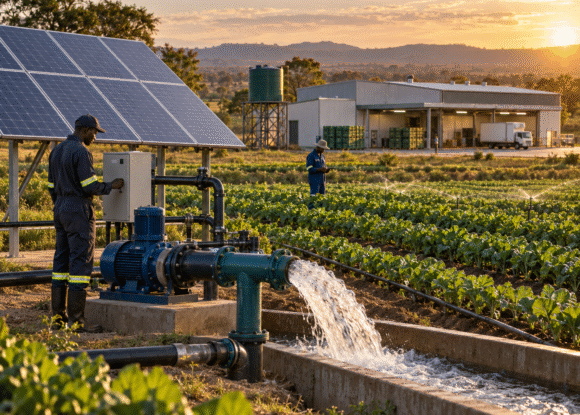
Zimbabwe does not lack infrastructure priorities. It has roads that carry regional trade, an electricity system that needs new generation and stronger networks, water systems that require rehabilitation and expansion, and digital infrastructure that increasingly underpins business activity. The harder question is not what should be built. It is which projects can move from policy documents and announcements to financeable transactions, construction and reliable service delivery.
That distinction matters because the country is trying to fund infrastructure from a balance sheet that cannot carry every requirement on its own. The IMF noted in May 2026 that Zimbabwe remained in debt default and had been excluded from international capital markets and most official financing for more than 25 years. At the same time, the 2026 National Budget allocated about ZiG26.9 billion toward infrastructure projects, while the Mid-Term Budget and Economic Review reported ZiG11.8 billion of infrastructure spending in the first half of the year.
The opportunity, therefore, is not a choice between public and private finance. Zimbabwe needs a financing architecture that uses each source of capital where it fits best.
The funding question is really a bankability question
Large infrastructure numbers can create the impression that the main constraint is simply a shortage of money. That is only part of the problem.
The National Energy Compact illustrates the scale. It estimates investment requirements of about US$9.13 billion across generation, transmission, distribution, electricity access and clean cooking between 2025 and 2030. More than US$4.42 billion is expected from the private sector. But that is a planning requirement, not money already committed or raised.
Private investors do not fund a national infrastructure plan as a single asset. They fund specific projects with identifiable cash flows, contractual rights, risk allocation and exit or repayment mechanisms. Pension funds do not invest because a project is socially important. Banks cannot lend long term merely because a road is strategically important. Development finance institutions will still require procurement, environmental and social work, technical feasibility and governance.
The 2026 Budget itself recognises the preparation gap. It set aside US$5 million for a Project Preparation Development Fund, noting that many local authorities and rural district councils lack the capacity to develop investment projects to bankability. That is a small amount relative to construction needs, but it addresses one of the most important bottlenecks: good projects need money before they are ready to raise money.
Public capital still has a central role
Some infrastructure should remain predominantly publicly financed. Network infrastructure with weak direct cash flows, basic access projects, public-health facilities and parts of water, education and transmission systems may not generate returns that can support fully commercial financing.
The National Energy Compact makes this distinction explicitly. It envisages private capital carrying most generation investment, but public funding carrying a much larger share of transmission, substations and on-grid access. That is a useful model for thinking beyond energy.
Government funding can therefore do several jobs. It can finance assets that cannot reasonably recover their costs from users, provide viability-gap support for projects with strong economic benefits but insufficient commercial returns, fund land and enabling works, and absorb risks that private capital is not well placed to take.
The challenge is fiscal space. Government support, guarantees and availability payments may help a project become financeable, but they also create contingent or future obligations. The 2026 Budget specifically identifies PPP-related contingent liabilities as a fiscal risk. A structure is not genuinely off-budget simply because the borrowing sits in a project vehicle.
Revenue-backed infrastructure can open a different pool of capital
Road financing in 2026 provides a useful live example of how Zimbabwe is trying to move beyond conventional budget funding.
In the Mid-Term Budget review, Government said it was establishing an Infrastructure Development Fund and had arranged a US$400 million facility with local financial institutions for priority road projects. The first US$100 million was described as secured subject to normal conditions precedent, with repayment intended to be ring-fenced against ZINARA revenues.
By 25 August, CBZ Holdings had outlined a broader proposed US$600 million infrastructure bond programme, with a first US$100 million tranche and US$75 million reported by management as already in place. CBZ said it intended to list the larger programme on the Victoria Falls Stock Exchange and seek regional and international investors.
These announcements are commercially significant, but they also demonstrate why project-stage language matters. An arrangement, a commitment, funds described as secured, satisfaction of conditions precedent, financial close, drawdown and physical construction are not the same event. Investors and policymakers should track the progression between them rather than add announced values together.
The underlying financing principle is stronger than any single headline number. Infrastructure with a predictable user-charge or contracted revenue stream can potentially support long-term debt if the revenue is legally ring-fenced, the assumptions are credible and the currency of the cash flow is aligned with the currency of the debt.
For roads, that may mean toll and road-fund revenues. In power, it may mean a bankable power-purchase agreement or wheeling arrangement. In digital infrastructure, it may mean contracted wholesale or enterprise revenues. In water, commercially viable components may need to be combined with public or concessional support where tariffs alone cannot recover the full investment cost.
PPPs are available, but the structure must carry real risk allocation
Zimbabwe’s PPP framework already provides several routes for private participation. Under the Zimbabwe Investment and Development Agency Act, a PPP may be paid from appropriated funds, loans raised by the contracting authority, user levies, project revenue, or a combination. The law also requires project development through pre-feasibility and feasibility work, approval processes and, where applicable, procurement.
That process is not administrative decoration. It is where the project should establish whether demand is credible, who bears construction and operating risk, how tariffs or payments will be adjusted, what happens if currency conditions change, how land and environmental approvals are handled, and what government support is actually required.
For institutional investors, the core questions are practical:
Is the revenue source contractually enforceable and sufficiently predictable?
Is debt being raised in the same currency as the project’s cash flow?
Are construction, completion and operating risks allocated to parties able to manage them?
Are guarantees and credit enhancements legally documented and fiscally transparent?
Is procurement credible enough to support value for money and lender confidence?
Is there reliable reporting after financial close, not only during capital raising?
A PPP that leaves most downside with Government but shifts the financing label to the private sector does not necessarily improve public finances. Equally, a project that transfers risks the private partner cannot price or control may never reach financial close.
Pension funds and capital markets can participate, but selectively
Zimbabwe has domestic institutional capital. The 2026 Budget, using IPEC data at 30 September 2025, put pension industry assets at about ZiG75.5 billion, equivalent at the time to roughly US$2.8 billion. That is substantial, but it is not an infrastructure funding pool waiting to be redirected.
Pension funds have liquidity needs, liability profiles, investment limits and return requirements. Infrastructure assets are often long dated, illiquid and exposed to construction, regulatory and currency risk. The investable bridge is therefore likely to be a well-structured security rather than direct exposure to an unfinished project.
VFEX provides a US-dollar-denominated market framework for debt securities. Its debt listing rules require disclosure around currency, use of proceeds, repayment terms and any security, guarantee or credit enhancement. That creates a potential channel for infrastructure bonds or project-linked debt. The proposed CBZ programme is an important test of whether the market can mobilise capital at meaningful scale.
But listing is not the same as liquidity. A deeper infrastructure debt market will need credible issuers, transparent project reporting, realistic pricing, a broader investor base and secondary-market activity. Domestic institutional capital can be catalytic, but it should not be used to conceal weak project economics.
Development finance can make difficult projects investable
Development finance institutions can add value beyond providing a loan. They can fund project preparation, provide partial-risk or credit guarantees, support procurement, bring environmental and social standards, and help crowd in commercial investors.
The World Bank’s Zimbabwe Renewable Energy Procurement Technical Assistance Project is a useful example. A US$1.5 million ESMAP grant was approved to help Government develop a competitive framework for renewable-energy IPPs, including transaction advice, legal and commercial structuring, risk allocation and preparation for solar procurement. The important point is not the size of the grant. It is what the money is buying: the work required before large private capital can commit.
Blended finance can perform a similar function. Concessional capital can absorb clearly defined risks or improve affordability, while commercial lenders and investors fund the portion that can earn market returns. The discipline is to use concessional support to solve a specific bankability problem, not to subsidise an otherwise unviable structure indefinitely.
Different sectors need different financing models
There is no single “infrastructure bond” solution for Zimbabwe.
Energy has some of the clearest private-capital opportunities where generation projects have bankable offtake, cost recovery, currency protection and workable grid connection. Transmission and access infrastructure will still require a larger public and development-finance role.
Transport and logistics can support revenue-backed structures where tolls, transit charges or contracted logistics revenues are credible. Rail rehabilitation may also suit resource-linked or availability-based structures, but only where repayment, asset access and counterparty obligations are transparent.
Water has strong economic and social returns but difficult tariff economics. Commercial components may need blended finance, municipal or utility revenues, guarantees and viability-gap support rather than pure project finance.
Digital infrastructure can attract strategic and private investors where enterprise, wholesale or subscriber revenues are clear. Public capital remains important where connectivity is socially valuable but commercially marginal.
The practical financing model should follow the economics of the asset, not the other way around.
Which capital fits which infrastructure?
Project profile
Likely financing mix
Core bankability anchor
Non-commercial networks and access
Budget, concessional finance, public entities
Fiscal commitment, procurement, service delivery
Revenue-backed roads and logistics
Banks, bonds, PPPs, institutional capital
Ring-fenced revenues, traffic/demand, security, currency match
Source note: SwitzView synthesis from the 2026 National Budget, 2026 Mid-Term Budget and Economic Review, Zimbabwe National Energy Compact, ZIDA Act, VFEX debt rules and World Bank project-preparation material. The table is analytical and does not imply that every financing route is available or suitable for every project.
The real measure is financial close and service delivery
Zimbabwe’s infrastructure ambition can attract more capital than the sovereign balance sheet alone can provide. The 2026 policy direction already points toward infrastructure funds, PPPs, revenue-backed borrowing, institutional capital, VFEX instruments, development finance and private-sector participation.
The constraint is converting those channels into projects that investors can underwrite and users can afford.
That requires more rigorous project preparation, clearer revenue models, transparent procurement, credible risk allocation, currency matching, enforceable contracts and consistent post-investment reporting. It also requires discipline in how progress is described. Announced project value should not be presented as capital raised. A financing commitment should not be treated as a drawdown. Construction commencement should not be confused with financial close.
For businesses and investors, the opportunity is likely to emerge project by project rather than through a single national funding solution. For policymakers, the strongest signal of progress will be a growing pipeline that moves visibly from feasibility to procurement, financial close, construction and operation.
Zimbabwe does not need every infrastructure project to be privately financed. It needs each project to use the capital that best matches its economics, risks and public purpose. That is how infrastructure ambition becomes investable execution.
Zimbabwe’s 2026/27 agricultural season needs finance that reaches beyond seed and fertiliser. This article examines how input delivery, irrigation, buyer payments, insurance and repayment timing should fit together under an uncertain rainfall outlook, while distinguishing announced facilities from accessible credit and identifying the operating evidence lenders, investors and agribusinesses should monitor before committing seasonal capital.
Zimbabwe’s 2027 budget could attract private investment by improving power, irrigation, logistics, tax predictability and financing conditions. Treasury’s strategy provides a useful direction, but proposed allocations are not completed projects or enacted incentives. This article examines where public resources could support viable private activity and what businesses should verify before relying on promised reforms or funding.
Zimbabwe’s capital markets now extend beyond listed shares into REITs, debt structures, commodity-oriented funds and private vehicles. Yet registration and product availability do not guarantee access or liquidity. The real opportunity lies in instruments with transparent cash flows, credible valuation, currency alignment and practical exits that can meet the needs of institutions and private investors.
Zimbabwe’s mineral export receipts are rising sharply, but the increase is not a simple production or beneficiation story. Official data show a concentrated uplift led by gold, commodity prices and selected product-form changes, alongside mixed physical output. For investors, the durable opportunity lies in separating price exposure, verified volume growth, formalisation and commercially proven domestic processing.
Zimbabwe’s renewable-energy opportunity in agriculture is commercially credible, but technology alone will not secure funding. This article examines where solar irrigation, cold storage, processing and biogas can generate bankable cash flows, which financing structures fit each use case, and why currency matching, utilisation, offtake and project preparation will determine whether projects move from potential to investment.
Zimbabwe’s first-quarter tourism indicators improved, but the headline 438% investment surge needs careful reading. ZTA says registration of previously informal facilities drove much of the increase. Arrivals and receipts rose, yet national occupancy stayed at 38%. The commercial opportunity is therefore selective: upgrade proven assets, build resilient regional demand and verify that every reported investment is deployable capital.