


Executive Summary
Governance isn’t just a box to tick, it’s the backbone of whether contracts hold, property rights are secure, boards act responsibly, regulations stay predictable, and institutions help rather than hinder investment. In Zimbabwe, this connection is impossible to ignore. Times of unstable policies, currency swings, and weak enforcement have shaken investor confidence. But targeted improvements, like the launch of the Zimbabwe Investment and Development Agency (ZIDA), clearer budget transparency, and the U.S.-dollar-based Victoria Falls Stock Exchange (VFEX), have opened up real opportunities in certain areas.
Here’s the bottom line: Strong governance cuts costs, reduces risk premiums, and encourages long-term investment. Weak governance does the opposite—it pushes up the cost of capital, favors quick, extractive deals over sustainable growth, and can leave approved projects stranded without actual funding. Right now, Zimbabwe’s numbers reflect this tension. Official data shows FDI inflows bouncing back to around US$597 million in 2024, but the governance environment remains tough, with low scores in corruption control, rule of law, and transparency.
For investors, the answer isn’t blind optimism or total pessimism. Zimbabwe still has strong potential in mining, agriculture value chains, tourism, energy, and listed instruments—but success hinges on rigorous governance due diligence: checking counterparties, ownership transparency, land rights, foreign exchange flexibility, fiscal and regulatory stability, and reliable dispute resolution.
Governance in the Investment Context
When we talk about governance in investments, we’re looking at three interconnected layers:
- Public Governance This is about how the government creates policies, manages public funds, protects property, and enforces contracts.
- Corporate Governance This covers how companies are run—board independence, related-party deals, audit quality, disclosure, risk management, and protection for minority shareholders.
- Regulatory Governance This sits between the two, focusing on the fairness, predictability, and consistency of licensing, taxation, exchange controls, competition rules, environmental standards, and sector-specific oversight.
The World Bank’s Worldwide Governance Indicators (WGI) break governance into six key areas, including government effectiveness, regulatory quality, rule of law, and corruption control.
Zimbabwe has the legal framework for governance in all these areas:
- The Zimbabwe Investment and Development Agency Act sets up a one-stop shop for investment promotion, facilitation, and protection.
- The Public Entities Corporate Governance Act introduces a national governance code for state-owned entities.
But having the rules on paper isn’t the same as making them work. Research on Zimbabwe’s 2015 National Code on Corporate Governance (ZimCode) shows it was brought in to tackle repeated corporate scandals. However, its early impact on the financial performance of listed companies wasn’t statistically significant, proof that weak enforcement and voluntary compliance can limit the effectiveness of even well-intentioned reforms.
How Governance Shapes Investment Decisions and Outcomes
Governance influences investment at three critical stages:
- Entry Decisions Investors need to know:
- Are the rules clear and transparent?
- Can permits be obtained without hidden costs or favoritism?
- Are ownership rights truly secure?
- Operating Returns Businesses depend on:
- Fair and efficient tax administration
- Stable exchange-rate policies
- Reliable access to foreign currency
- Contracts and court judgments that are actually enforceable
- Exit Options The ability to move capital, repatriate profits, or sell assets depends on:
- Functioning capital markets
- Clear transfer rules
- Strong legal protections
Zimbabwe’s own history shows how this plays out. The World Bank’s 2022 Country Economic Memorandum highlighted that while the government had scrapped the 51% indigenization rule for most sectors, created ZIDA, and improved budget reporting and debt transparency, persistent issues like macroeconomic instability, exchange-rate distortions, quasi-fiscal activities, and a costly regulatory environment continued to stifle private investment and economic growth. The report also noted that policy volatility and multiple exchange rates increased uncertainty and discouraged investment.
This aligns with local research. A study by Joe Muzurura on FDI determinants found that corruption, political instability, poor governance, weak export competitiveness, inflation, and inconsistent policies were major barriers to foreign investment in Zimbabwe. In short, governance isn’t just a concern for investors, it’s a proven constraint on the country’s economic potential.
Capital markets tell a similar story. The 2026 U.S. Investment Climate Statement for Zimbabwe acknowledges ongoing investor interest in mining, agriculture, energy, and tourism, but also highlights frustrations with policy inconsistency, weak institutional capacity, corruption, and the use of statutory instruments that can change the legal landscape with little warning. The IMF’s 2025 Article IV mission went further, stressing that stronger spending controls, public-sector transparency, and better governance of the Mutapa Investment Fund and state-owned enterprises (SOEs) are essential to reduce fiscal risks and restore credibility.
Zimbabwe: Evidence and Case Studies
Key Governance and Investment Indicators
Here’s the latest data, validated against primary sources:
| Indicator | Year | Zimbabwe Value | Interpretation |
|---|---|---|---|
| WGI Control of Corruption | 2024 | -1.25 | Weak corruption control |
| WGI Government Effectiveness | 2024 | -0.99 | Weak administrative capability |
| WGI Regulatory Quality | 2024 | -1.18 | Weak policy/regulatory quality |
| WGI Rule of Law | 2024 | -1.21 | Weak contract/enforcement environment |
| Transparency International CPI | 2025 | 22/100; rank 157/182 | High perceived public-sector corruption |
| Ibrahim Index of African Governance | 2023 | 47.1/100; rank 31/54 | Below African average of 49.3 |
| FDI Inflows | 2024 | US$597 million | Recovery from 2020, but still volatile |
| Real GDP Growth | 2024 | 2.0% | Slowed by drought and instability |
| Doing Business Rank | 2020 | 140/190 | Historically improved (series discontinued) |
FDI Inflows (2015–2024)
The pattern here is classic for a governance-sensitive economy:
- 2018: Sharp spike (US$748 million)
- 2020: Collapse (US$194 million, pandemic low)
- 2023–2024: Partial rebound (US$635 million → US$597 million)
Data Breakdown:
- 2015–2016: World Bank-based data (US$399.2m, US$343.0m)
- 2017–2024: UNCTAD World Investment Report annex tables
- 2024: Zimbabwe Ministry of Finance corroborates levels
Governance Scores (2024)
All four key WGI dimensions remain weak, clustered at the lower end of the -2.5 to +2.5 scale.
| Dimension | Score | Interpretation |
|---|---|---|
| Control of Corruption | -1.25 | Weak corruption control |
| Government Effectiveness | -0.99 | Weak administrative capability |
| Regulatory Quality | -1.18 | Weak policy/regulatory quality |
| Rule of Law | -1.21 | Weak contract/enforcement environment |
Key Takeaway: Governance risk in Zimbabwe isn’t an outlier, it’s a base-case assumption. Investors should price it in from the start.
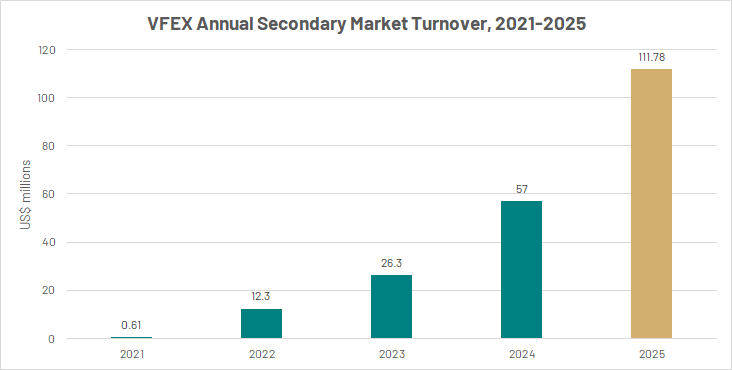
Case Study 1: Victoria Falls Stock Exchange (VFEX) – A Bright Spot
In 2024, Treasury reported:
- Listings: Grew from 14 to 16
- Turnover: Jumped from US$39.2 million to US$56.9 million
- Market Capitalization: Rose from US$1.21 billion to US$1.28 billion
Why It Works: This doesn’t mean governance is fixed, but it does show that when investors get:
- Clear rules
- Hard-currency settlement
- A well-structured market
…capital follows.
Case Study 2: Land and Policy Credibility – A Work in Progress
Zimbabwe’s 2020 Global Compensation Deed and recent efforts to compensate or return farms protected under bilateral treaties are steps to fix a long-standing property-rights issue that hurt agriculture, external credibility, and investor trust.
Recent Progress:
- Payments to treaty-protected investors and former farmers send a positive signal.
- But the fact that such fixes are needed proves how costly governance failures can be over the long term.
Regulatory Lessons: The IMF applauded the repeal of Statutory Instrument 81A of 2024, which had:
- Distorted pricing
- Increased dollarization
- Boosted informality
What Investors and Policymakers Should Do
For Policymakers: Follow-Through Matters
Zimbabwe doesn’t lack reform ideas—it lacks consistent, rules-based execution.
High-Impact Reforms:
- Protect property rights—no exceptions.
- Avoid sudden statutory changes that disrupt business.
- Strengthen public financial management and arrears controls.
- Improve transparency for SOEs and the Mutapa Investment Fund.
- Deepen formal foreign-exchange markets.
- Publish clear, reliable administrative guidance in one accessible place.
The Bottom Line (from World Bank, IMF, U.S. assessments): Predictable institutions matter as much as incentives.
For Investors: Structure for Weakness, Not Perfection
Investors should assume institutional weaknesses and structure deals to compensate for them.
Practical Steps:
- Stage capital deployment (don’t commit all at once).
- Use offshore cash-waterfall structures (where legally permissible).
- Draft robust shareholder agreements.
- Require independent audits.
- Screen for political exposure.
- Include explicit dispute-resolution clauses.
Critical Distinction: In Zimbabwe, there’s a big difference between sectors with strong fundamentals and those with strong governance-adjusted fundamentals. This distinction is non-negotiable.
Governance Due Diligence Checklist for Investors in Zimbabwe
Before committing capital, investors should ask:
| Due-Diligence Question | Why It Matters in Zimbabwe | Evidence to Request |
|---|---|---|
| Who ultimately owns the counterparty, and are any principals politically exposed? | Opaque ownership and related-party risks can distort contracts, licenses, and payments. | Beneficial ownership chart, board register, sanctions/PEP checks, audited accounts. |
| Is land tenure secure, transferable, and free of treaty or resettlement disputes? | Property-rights risks are a major concern. | Title documents, lease terms, BIPPA status, litigation search, ministry confirmations. |
| Are foreign-exchange revenues, dividend repatriation, and pricing rules clearly documented? | FX and pricing rules have been a major source of risk. | Exchange-control approvals, banking letters, contract clauses, sensitivity analysis. |
| Can the project survive tax or statutory-instrument changes? | Policy inconsistency and sudden legal changes are key risks. | Legal memo on applicable SIs, stabilization clauses (if available), tax rulings. |
| Are licenses, environmental approvals, and local-content rules complete and current? | Regulatory failures often surface in permit disputes. | Full permit matrix, EIA approvals, renewal calendar, regulator correspondence. |
| Is corporate governance strong enough to protect minority investors and cash flows? | Governance codes exist, but enforcement is uneven. | Board charter, audit committee terms, external audit opinions, related-party policy, whistleblowing arrangements. |
| What is the real dispute-resolution path? | Contract value depends on enforceability. | Arbitration clause, governing law, security package, collateral perfection, local counsel opinion. |
| What are the project’s community, labor, and ESG exposure points? | Social and labor issues can quickly escalate into political and regulatory risks. | Community agreements, labor compliance records, grievance logs, ESG reporting. |
Note: This checklist is based on risks repeatedly flagged in Zimbabwe’s statutory framework, investment-climate analyses, IMF advice, and reform experience.
Sources
- UNCTAD – World Investment Report 2025
- Transparency International – CPI 2025: Zimbabwe
- Mo Ibrahim Foundation – IIAG 2024: Zimbabwe Profile
- World Bank – Worldwide Governance Indicators 2024
- IMF – 2025 Article IV Mission to Zimbabwe
- Zimbabwe Ministry of Finance – 2024 Annual Review
- World Bank – Zimbabwe Country Economic Memorandum 2022
- U.S. Department of Commerce – Zimbabwe Investment Climate Statement 2026
- Reuters/AP – Reporting on compensation, treaty-protected farms, and policy credibility.

Can Zimbabwe Turn Price Stability into Productive Credit?
Zimbabwe’s latest inflation data shows a more stable price environment, while bank lending has also expanded. Yet high nominal and real borrowing costs, the dominance of US dollar credit, cautious bank pricing and limited local-currency transmission still constrain productive finance. This article assesses what must change before stability becomes accessible business credit at scale for Zimbabwean companies.

Financing Zimbabwe’s Infrastructure Ambition
Zimbabwe’s infrastructure challenge is not only about finding more capital. It is about turning roads, energy, water and digital projects into bankable transactions with credible cash flows, risk allocation and governance. This article examines where funding can realistically come from, why project preparation matters, and what will determine whether announced projects reach financial close and delivery.

Unlocking Working Capital Through Structured Finance in Zimbabwe
Zimbabwean businesses often run short of working capital not because sales are weak, but because cash leaves before customer payments arrive. Structured finance can bridge that timing gap by funding verified receivables, orders, inventory or trade flows. The opportunity is real, but only when legal rights, currency, monitoring and repayment controls are designed around the underlying cash flow.

Turning Diaspora Remittances into Productive Investment in Zimbabwe
Zimbabwe’s diaspora inflows are large, but remittances are not the same as investment. The opportunity is to give Zimbabweans abroad credible ways to allocate savings into regulated funds, listed securities, businesses and projects without weakening household support. That requires transparent governance, currency matching, reliable settlement, clear exit routes and investment structures built around real cash flows.

What Zimbabwe’s 2026 Mid-Year Economic Review Means for Business
Zimbabwe’s 2026 Mid-Term Budget and Economic Review points to stronger growth, low inflation, firmer foreign-currency inflows and disciplined fiscal execution. For businesses, the signal is improved planning visibility, not the disappearance of risk. Currency matching, tax compliance, energy resilience, working-capital discipline and careful sector selection remain essential as licensing reforms, debt pressures and climate risks shape the second half.

How to Evaluate an Investment Opportunity Before Committing Capital
A high promised return is only the starting point. Before committing capital, learn how to evaluate an investment opportunity in Zimbabwe by testing its cash-flow source, legal structure, promoter, expected return, currency exposure, liquidity, security, fees, regulatory standing and exit options, while identifying the risks, assumptions and potential losses that could affect your capital and investment objectives.